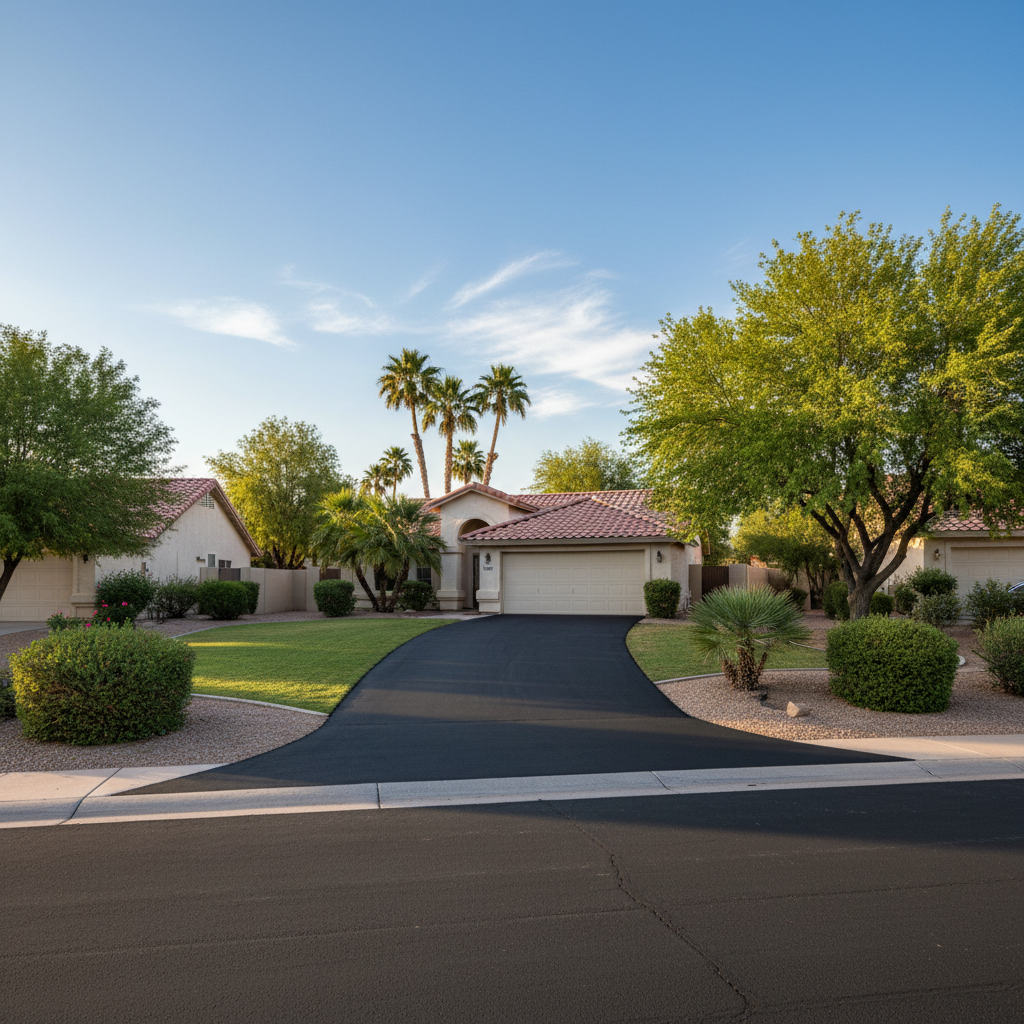
Ever wonder why your asphalt driveway seems to crack faster than your neighbor's up north? It's not just your imagination, believe me. Our Phoenix climate, with its brutal summers and occasional heavy monsoons, is a unique beast when it comes to pavement. As someone who's been laying asphalt here for years, I've seen it all. I'm here to tell you what you need to know to keep your driveway looking good and lasting long.
When's the Best Time to Pave in Phoenix?
This is probably the most common question I get. You'd think summer's great because it's hot, right? Not exactly. While heat helps asphalt cure, extreme heat — like our 115-degree days — can actually be too much of a good thing. It makes the asphalt mix too fluid, harder to compact properly, and can lead to issues down the road. Plus, it's just plain miserable for the crew.
For new paving or major repairs, I always recommend the cooler months. We're talking late fall, winter, and early spring. From about October through April, temperatures are usually in that sweet spot. It's warm enough for the asphalt to be workable and cure correctly, but not so hot that it becomes a problem. The ground temperature is also a big factor. If the ground is too hot, it affects the cooling process of the asphalt, which is critical for its long-term stability. You want that new pavement to cool down at a controlled rate, not super fast or super slow.
Now, if you're looking at something like a sealcoat, that's a bit different. You need warmer temperatures for sealcoat to cure properly, but again, not scorching hot. Spring and fall are ideal for sealcoating. You want a few days of consistent 70-degree-plus weather, but you definitely don't want to be doing it when it's over 100 degrees. The material can dry too quickly, leading to cracking or poor adhesion. It's a delicate balance, and that's why experience in this specific climate matters so much.
Weather Conditions That Really Matter
Beyond just temperature, there are a few other weather conditions we're always keeping an eye on when we're working on your driveway.
- Rain: This one's a no-brainer. You can't pave or sealcoat on wet surfaces. Asphalt needs a dry base to bond properly. If rain is in the forecast, we'll reschedule. It's better to wait a day or two than to do a shoddy job that won't last. Even a little bit of moisture can cause big problems with adhesion and compaction.
- Humidity: While not as critical as temperature or rain, high humidity can slow down the curing process for sealcoats. It's usually not a deal-breaker here in Phoenix, especially outside of monsoon season, but it's something we consider.
- Wind: Strong winds can be a nuisance. They can blow dust and debris onto a fresh surface, especially during sealcoating, and they can also accelerate the drying of sealcoat, sometimes too quickly. This is especially true during those dusty spring days we get before the monsoons hit.
- Ground Temperature: I mentioned this before, but it's worth repeating. The temperature of the ground beneath your asphalt is crucial. If it's too cold, the asphalt cools too fast and doesn't compact well. If it's too hot, it can stay too pliable for too long, leading to rutting or other issues. That's why we often start early in the morning during warmer months to take advantage of cooler ground temperatures.
Protecting Your Investment Year-Round
Okay, so you've got a beautiful new or freshly sealed driveway. How do you keep it that way? It's not just about scheduling work; it's about ongoing care.
First off, keep it clean. Sweep off dirt, leaves, and especially any oil or chemical spills immediately. Our intense sun bakes everything onto the surface, and oil can break down the asphalt binder. A little dish soap and water can go a long way if you catch it fast.
Next, watch for cracks. Even small cracks can turn into big problems quickly in our climate. Water gets in, expands and contracts with temperature changes, and then the summer heat makes the asphalt more pliable, allowing those cracks to widen. When we get those heavy monsoon downpours, that water just sits in those cracks, eroding the base underneath. If you see cracks forming, get them filled. It's a relatively inexpensive repair that can prevent much more costly damage down the line. Don't let them get out of hand. Western Asphalt Solutions can help you with that before they become potholes.
Also, be mindful of heavy vehicles. While asphalt is tough, repeatedly parking heavy RVs or commercial trucks on your residential driveway can cause depressions and cracking over time, especially during our hot summers when the asphalt is softer. If you've got a heavy vehicle, consider rotating where you park it or even investing in concrete pads for those specific spots.
Finally, plan for regular sealcoating. For most residential driveways in Phoenix, every 2-3 years is a good general guideline, but it really depends on traffic, sun exposure, and the original quality of the asphalt. Sealcoating protects the asphalt from UV rays, water penetration, and oxidation — all major enemies of pavement in our desert environment. It's like sunscreen for your driveway, and it's essential here. It keeps your driveway looking sharp and extends its lifespan significantly.
Taking care of your asphalt driveway in Phoenix requires a bit of understanding about our unique climate. But with the right timing for repairs and a little bit of regular maintenance, you can keep your pavement looking great and performing well for years to come. Don't hesitate to reach out if you have questions or need a hand with your asphalt – that's what we're here for.